Avatar

Chaowei Fang

Biography

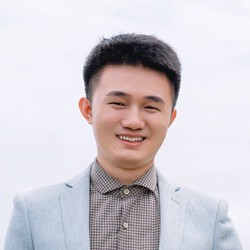
Chaowei Fang will be joining the School of Software Engineering at Xi’an Jiaotong University. Prospective graduate students interested in artificial intelligence and multimodal learning are warmly welcome to get in touch. From 2020 to 2026, he served as an Associate Professor at the School of Artificial Intelligence, Xidian University. He received his Ph.D. from The University of Hong Kong in 2019 and his B.Eng. from Xi’an Jiaotong University in 2013. His research interests include multimodal information processing, representation, and understanding. Email: chaoweifang AT outlook.com

方超伟即将加入西安交通大学软件学院,欢迎有志于从事人工智能与多模态方向研究的考研学生联系。 2020–2026年于西安电子科技大学人工智能学院任副教授。2019年获香港大学博士学位,2013年获西安交通大学学士学位。 研究方向包括:多模态信息处理、表示与理解。 邮箱:chaoweifang AT outlook.com

Research Topics

Publications

1. Learning Prompt Adapters for Forgetting-Free Continual Image Super-resolution. TIP, 2026.
2. Isolating Interference Factors for Robust Cloth-Changing Person Re-Identification. TPAMI, 2026.
3. Dual-domain Adaptation Networks for Realistic Image Super-resolution. TMM, 2025.
4. High-frequency structure transformer for magnetic resonance image super-resolution. PR, 2025.
6. Navigating Semantic Drift in Task-Agnostic Class-Incremental Learning. ICML, 2025.
7. Progressive Feature-Attribute Matching via Bi-directional Generation for Transductive Zero-Shot Learning. TCSVT, 2025.
8. Decouple and Couple: Exploiting Prior Knowledge for Visible Video Watermark Removal. TIP, 2025.
9. Real-Time Detection of Hypoxia Stress Behavior in Aquaculture Fish Using an Enhanced YOLOv8 Model. Aquaculture International, 2025.
10. RegionMatch: Pixel-Region Collaboration for Semi-Supervised Semantic Segmentation in Remote Sensing Images. IJCAI, 2025.
11. Screening, Rectifying, and Re-Screening: A Unified Framework for Tuning Vision-Language Models with Noisy Labels. IJCAI, 2025.
12. Learning from Open-set Noisy Labels based on Multi-prototype Modeling. PR, 2025.
13. Bridging Knowledge Gap between Image Inpainting and Large-Area Visible Watermark Removal. AAAI, 2025.
14. Hierarchically Controlled Deformable 3D Gaussians for Talking Head Synthesis. AAAI, 2025.
15. Unsupervised Degradation Representation Aware Transform for Real-World Blind Image Super-Resolution. AAAI, 2025.
16. Diffusion-based Layer-wise Semantic Reconstruction for Unsupervised Out-of-Distribution Detection. NeurIPS, 2024.
18. Disentangling Identity Features from Interference Factors for Cloth-Changing Person Re-Identification. ACM MM, 2024.
19. Uncertainty-aware Active Domain Adaptive Salient Object Detection. TIP, 2024.
20. Revisiting the Power of Prompt for Visual Tuning. ICML, 2024.
21. Progressive Adapting and Pruning: Domain-Incremental Learning for Saliency Prediction. TOMM, 2024.
22. Complex visual question answering based on uniform form and content. Appl. Int., 2024.
23. Progressive Feature Self-Reinforcement for Weakly Supervised Semantic Segmentation. AAAI, 2024.
24. Removing Interference and Recovering Content Imaginatively for Visible Watermark Removal. AAAI, 2024.
25. Variance-insensitive and Target-preserving Mask Refinement for Interactive Image Segmentation. AAAI, 2024.
26. Weakly Supervised Semantic Segmentation via Alternate Self-Dual Teaching. TIP, 2023.
27. RankMatch: Fostering Confidence and Consistency in Learning with Noisy Labels. ICCV, 2023.
28. Multi-task Learning with Hierarchical Guidance for Locating and Stratifying Submucosal Tumors. JBHI, 2023.
29. Separating Noisy Samples from Tail Classes for Long-Tailed Image Classification with Label Noise. TNNLS, 2023.
30. Select, Purify and Exchange: A Multi-Source Unsupervised Domain Adaptation Method for Building Extraction. TNNLS, 2023.
31. Identity-Preserving Talking Face Generation with Landmark and Appearance Priors. CVPR, 2023.
32. Reliable Mutual Distillation for Medical Image Segmentation under Imperfect Annotations. TMI, 2023.
33. Adapting Object Size Variance and Class Imbalance for Semi-Supervised Object Detection. AAAI, 2023.
34. De-biased Teacher: Rethinking IoU Matching for Semi-Supervised Object Detection. AAAI, 2023.
35. Compound Batch Normalization for Long-tailed Image Classification. ACM MM, 2022.
36. Cross-Modality High-Frequency Transformer for MR Image Super-Resolution. ACM MM, 2022.
38. Double-Check Soft Teacher for Semi-Supervised Object Detection. IJCAI, 2022.
39. Incremental Cross-view Mutual Distillation for Self-supervised Medical CT Synthesis. CVPR, 2022. PDF
40. Cross-level Contrastive Learning and Consistency Constraint for Semi-supervised Medical Image Segmentation. ISBI, 2022. PDF
42. Densely Nested Top-Down Flows for Salient Object Detection. SCIS, 2021. PDF
43. M3Net: A Multi-scale Multi-view Framework for Multi-phase Pancreas Segmentation Based on Cross-phase Non-local Attention. MIA, 2021. PDF
44. Trash to Treasure: Harvesting OOD Data with Cross-Modal Matching for Open-Set Semi-Supervised Learning. ICCV, 2021. PDF
45. CALLip: Lipreading using Contrastive and Attribute Learning. ACM MM, 2021. PDF
46. Contralaterally Enhanced Networks for Thoracic Disease Detection. TMI, 2021. PDF
47. Deep Transformers for Fast Small Intestine Grounding in Capsule Endoscope Video. ISBI, 2021. PDF
48. Graph Neural Networks for Unsupervised Domain Adaptation of Histopathological ImageAnalytics. ISBI, 2021. PDF
49. PNEN: Pyramid Non-Local Enhanced Networks. TIP, 2020. PDF
50. Meta Corrupted Pixels Mining for Medical Image Segmentation. MICCAI, 2020. PDF
51. Towards Computational Analytics of 3D Neuron Images using Deep Adversarial Learning. Neurocomputing, 2020. PDF
52. Self-Enhanced Convolutional Network for Facial Video Hallucination. TIP, 2019. PDF
53. Globally Guided Progressive Fusion Network for 3D Pancreas Segmentation. MICCAI, 2019. PDF
54. Piecewise Flat Embedding for Image Segmentation. TPAMI, 2019. PDF Code
57. Piecewise Flat Embedding for Image Segmentation. ICCV, 2015. PDF

Resources

Contact